 PixScript
How to Get an Acast Transcript (3 Methods)
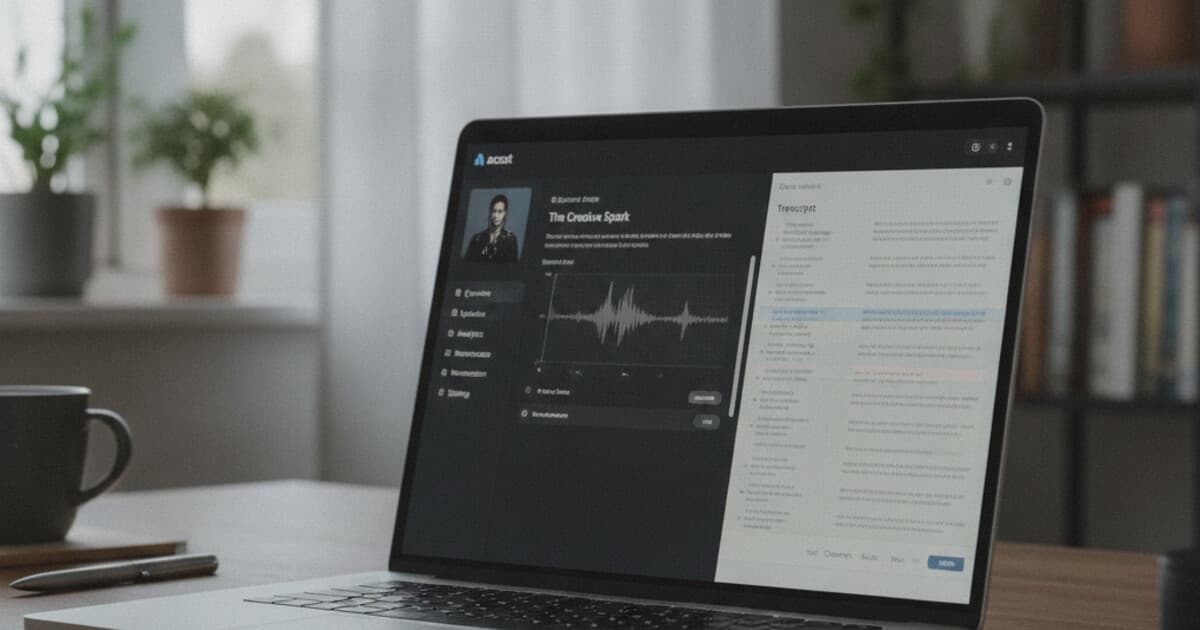
Acast runs one of the largest podcast hosting networks in the world, with tens of thousands of shows across its platform. If you need a text version of an Acast episode, the path forward depends on whether you're the podcaster who made it or a listener who wants to read along. Acast includes a built-in transcription option in Creator Studio, but it's only available on paid plans and outputs plain text with no SRT or VTT export for video captions. This guide covers 3 methods to get an Acast transcript, whatever your situation.
To get an Acast transcript, use Acast's built-in Creator Studio transcription if you're on a paid hosting plan, or download the episode's MP3 and run it through PixScript. PixScript adds timestamps, SRT and VTT export for captions, and AI summaries. Listeners can also check Apple Podcasts or Overcast for transcripts directly if the podcaster enabled them.
Does Acast Have a Built-In Transcript Feature?
Acast does have a native transcription option, but it's not available to everyone. Here's what it actually does.
Acast's transcription feature lives inside Creator Studio, the platform's podcast management dashboard. When enabled on a paid plan, it uses AI to generate a text version of your episode and embeds it in your podcast's RSS feed as a transcript tag, following the podcast namespace standard developed by Podcast Index. Podcast apps that support this standard, including Apple Podcasts, Overcast, and Pocket Casts, can surface the text directly to listeners within the app, with no action required from them. Acast began rolling out transcription to paid plan subscribers and it's now part of the Creator Studio workflow for episode management. The output format is plain text. Acast doesn't export SRT or VTT files, which are the formats required for adding timed captions to YouTube videos, embedding in web video players, or meeting accessibility compliance requirements. Podcasters who publish video versions of their episodes need an external tool for proper subtitle files.
If you're on the free Acast plan, the built-in transcription feature isn't available to you. You'll need Method 2 regardless.
The transcription option also only covers episodes you host on Acast. If you want a transcript of someone else's Acast show, you're working from the listener side, which Method 3 covers.
Method 1: Use Acast's Built-In Transcription (Creator Studio)
If you're on a paid Acast hosting plan, here's how to use the native transcription tool.
Log into your Acast Creator Studio account and navigate to your episode list. Open the episode you want to transcribe. Look for the "Transcription" section in the episode editor. If your plan includes the feature, you'll see an option to generate a transcript.
Click to generate and give it a few minutes to process. For longer episodes, processing can take 10 to 15 minutes.
Once it's done, Acast attaches the transcript to your podcast's RSS feed as a transcript tag. Listeners using Apple Podcasts, Overcast, or Pocket Casts will be able to read the transcript inside those apps without visiting your website.
A few things to know about this method:
- The output is plain text only
- There's no option to download as SRT, VTT, PDF, or any other format
- Older episodes may need to be triggered manually one at a time
- You can't edit the transcript inside Creator Studio after generation
Best for: Podcasters on paid Acast plans who want transcripts surfaced to listeners in podcast apps and don't need subtitle files.
Method 2: Download the MP3 and Transcribe with PixScript
This method works for anyone: paid Acast hosts who need SRT files, free plan users who don't have Creator Studio transcription, or listeners who want a transcript of someone else's show.
Step 1: Get the episode's MP3.
Every Acast episode has a direct audio URL. You can find it a few ways:
- On the episode's web page, right-click the audio player and choose "Save audio as" to grab the direct MP3 link
- Check the podcast's RSS feed (usually linked from the show's Acast page) and find the
<enclosure>tag for the episode you want - In Apple Podcasts, long-press the episode and look for a download or share option to get the file
Download the MP3 to your computer.
Step 2: Upload to PixScript.
Go to pixscript.com and click "Upload File." Select the MP3 you downloaded from Acast. PixScript handles files up to 30 minutes on the Pro plan ($9/month) and unlimited length on Business ($19/month). The free tier covers files up to 5 minutes.
Step 3: Get your transcript.
PixScript processes the file and returns a full transcript with timestamps. From there you can:
- Download as SRT (for YouTube video captions)
- Download as VTT (for web video players)
- Download as PDF or TXT
- Run the AI summary for a quick episode overview
- Use AI rewrite to turn the transcript into a blog post or social media post
The whole process takes about 2 minutes for a standard 45-minute episode.
For a broader look at transcription tools for podcast audio, see our guide to the best podcast transcription software in 2026.
Best for: Anyone who needs SRT or VTT files, timestamps, or AI features. Also the only option for free Acast plan users.
Method 3: Get an Acast Transcript as a Listener
If you don't host on Acast and just want a transcript of a show you listen to, start here.
Check your podcast app first. If the show's host enabled Acast transcription, it may already be in your app. In Apple Podcasts, open the episode and tap the transcript icon (the speech bubble) in the player. Overcast shows a similar option. This only works if the podcaster turned on the feature.
Check the show's website. Some Acast podcasters publish transcript text on their episode pages or show notes. Scroll through the episode page and look for a transcript section or a downloadable text file.
Download the MP3 and use PixScript. If neither of those options turns up a transcript, find the episode's MP3 link using the method described above and upload it to PixScript. The free tier handles episodes up to 5 minutes. For longer episodes, the Pro plan at $9/month gives you unlimited transcripts up to 30 minutes.
For a step-by-step walkthrough of transcribing any podcast episode, see our guide to transcribing podcast episodes for free.
Best for: Listeners who want to read, quote, or search the content of a specific Acast episode.
Which Acast Transcript Method Should You Use?
Here's a quick decision guide:
- Paid Acast plan + just need RSS transcript for podcast apps: Use Method 1 (Creator Studio)
- Need SRT or VTT files for video captions: Use Method 2 (PixScript upload)
- Free Acast plan with no Creator Studio access: Use Method 2 (PixScript upload)
- Listener who wants a transcript: Start with Method 3 (check podcast app), fall back to Method 2
- Need timestamps, AI summary, translation, or PDF export: Use Method 2 (PixScript upload)
Acast's native option is fine for getting text into your RSS feed. It covers the listener-facing use case well if you're publishing to Apple Podcasts or Overcast. But it doesn't help beyond that: no timestamps formatted for syncing with video, no subtitle file exports, and no way to turn the transcript into a blog post or repurposed content.
PixScript fills in the rest. You can translate your Acast episode transcript into 10 languages on the Pro plan or 50+ on Business, which helps podcasters targeting multilingual audiences. That's not something Acast's built-in transcription does at all.
Frequently Asked Questions
Is Acast transcription available on the free plan?
Acast's built-in transcription is part of Creator Studio and requires a paid hosting plan. Free plan users don't have access to the native transcription feature. If you're on the free plan and need a transcript, download the episode's MP3 and upload it to PixScript instead.
Can I get an SRT file from Acast?
Acast's native transcription doesn't export SRT or VTT files. It only produces plain text embedded in your RSS feed. If you need an SRT file for YouTube captions or subtitle syncing, download the episode's MP3 and use PixScript, which exports SRT, VTT, PDF, and TXT.
How do I find the direct MP3 link for an Acast episode?
Right-click the audio player on the episode's web page and choose "Save audio as" to get the direct file URL. You can also open the podcast's RSS feed and look for the <enclosure> tag on the episode you want. That URL is the direct MP3 link.
Does PixScript work with long podcast episodes?
PixScript handles files up to 30 minutes on the Pro plan ($9/month) and unlimited length on the Business plan ($19/month). The free tier handles up to 5 minutes per file. Most interviews and full-length episodes fit within the Pro plan limits.
Can I translate an Acast transcript into another language?
PixScript supports translation into 10 languages on Pro and 50+ on Business. After uploading your Acast episode MP3 and generating a transcript, use the translation option to get a version in Spanish, French, Japanese, or any supported language. Acast's native transcription doesn't include translation.
If you produce audio content and need transcripts with subtitle exports, timestamps, and multilingual support, PixScript handles all of it from a single file upload.